A single keyword ad group (SKAG) is a Google Ads ad group built around one keyword, with ads written specifically for it. SKAGs still work in 2026, but only as a precision tool for a handful of high-value search terms. As a structure for a whole account they’ve mostly stopped paying off: exact match now covers close variants, responsive search ads replaced hand-matched text ads, and smart bidding with broader match types does much of what SKAGs were invented to do manually.
When we first wrote this post in 2021, we recommended SKAGs fairly broadly. Google Ads has changed a lot since, so here’s an honest update on what still holds and what doesn’t.
What is a SKAG campaign?
A SKAG campaign gives every important keyword its own ad group. Instead of one ad group with twenty related keywords sharing the same ads, you get twenty ad groups, each with one keyword (traditionally in exact and phrase match) and ads whose headlines repeat that keyword.
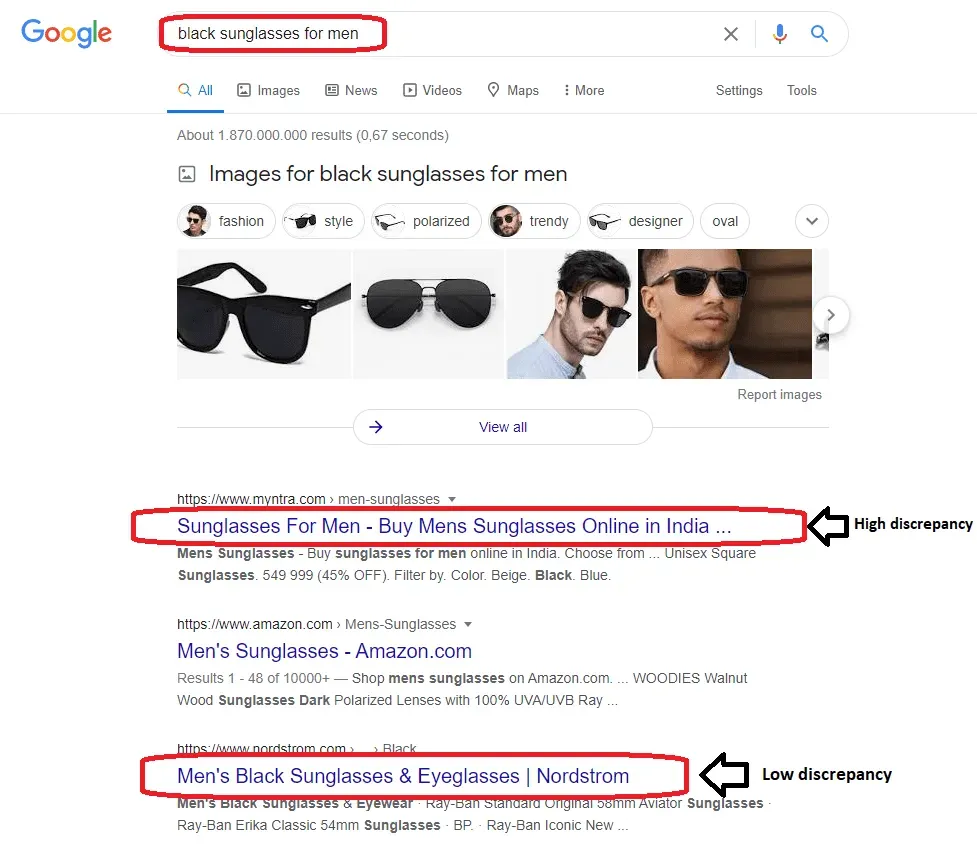
The idea was simple: if the ad matches the search almost word for word, more people click, Quality Score rises and clicks get cheaper. You also see exactly how each keyword performs and can bid on each one separately.
Why did SKAGs work so well before?
Because Google Ads used to reward manual precision. Until the late 2010s, exact match meant (almost) exactly that keyword, text ads had fixed headlines you wrote per ad group, and most accounts bid manually. A SKAG gave you control over all three: which searches triggered the ad, what the ad said, and what you paid.
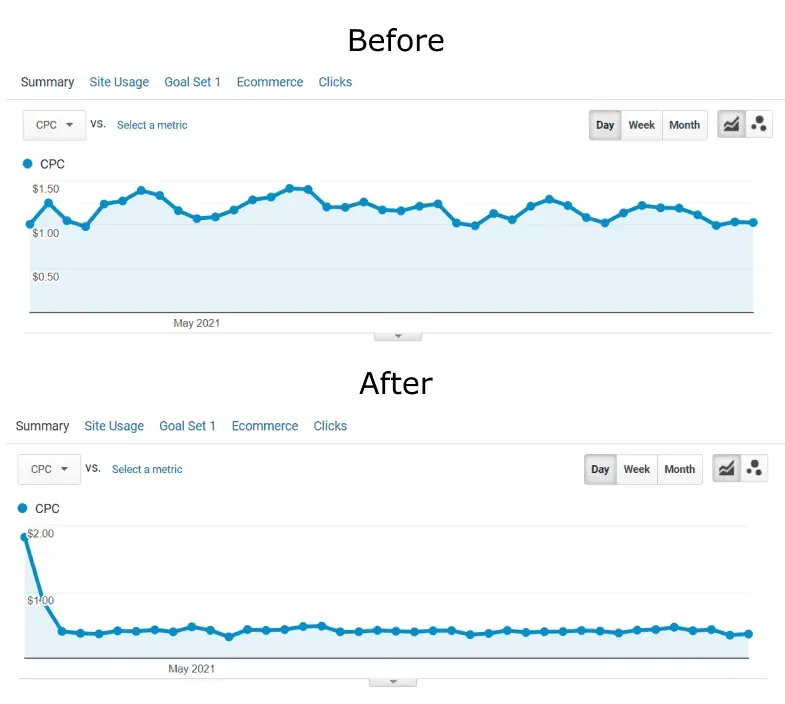
In 2021 we restructured accounts this way and saw lower cost per click as a result. The chart below is from one of those accounts.
What changed for SKAGs in Google Ads?
Four changes, mostly between 2018 and 2025:
- Exact match is no longer exact. It now matches close variants with the same meaning or intent, so
[accounting software]can also show for “software for accounting”. One keyword per ad group no longer means one search per ad group, and SKAGs can end up competing with each other. - Responsive search ads replaced expanded text ads. Since 2022 you can’t create new text ads with fixed headlines. To keep the keyword in headline 1 you have to pin it, which limits Google’s testing and usually lowers ad strength.
- Smart bidding learns at campaign level. Target CPA and target ROAS bid on each auction using signals no manual bid can see (device, location, time, audience, the query itself). Splitting keywords into tiny ad groups doesn’t give the algorithm more control; it mostly gives you more to manage.
- Google pushes broad match with smart bidding, and newer options such as AI Max for Search campaigns extend matching further. Search terms reports also hide more low-volume queries than they used to, so the “see every search” advantage of SKAGs has shrunk.
The result: in most accounts we audit, a full SKAG build means hundreds of ad groups with too little data each, ads that can’t be tested properly, and a structure that fights the bidding system rather than feeding it.
When do SKAGs still make sense in 2026?
They’re still the right tool in a few situations:
- A small set of high-value, high-volume terms where you want a dedicated ad and landing page, such as your main product category or a competitor comparison.
- Brand versus non-brand separation, so brand searches don’t flatter the non-brand numbers.
- Regulated industries, where every headline has to be approved and you need to know exactly which ad shows for which query. We see this in fintech and credit-repair accounts.
- Accounts on manual or enhanced CPC bidding with too little conversion data for smart bidding to work yet.
Outside those cases, we build tightly themed ad groups instead (sometimes called STAGs, single theme ad groups): a handful of keywords that share one intent and one landing page, with responsive ads written for that theme. You keep relevance without starving each ad group of data.
What matters more than SKAGs now?
Conversion data. Smart bidding is only as good as the conversions you feed it, so the biggest gains usually come from measuring the right thing:
- Track qualified leads or revenue, not form fills. Importing offline conversions from your CRM (closed-won deals, or leads sales has qualified) lets Google bid for customers rather than clicks. Our guide to GA4 offline conversions via the Measurement Protocol shows one way to do it.
- Fix the landing page and the funnel before adding structure. Relevance now comes as much from the page as from the keyword; see our Google Ads landing page guide.
- Use negatives and search-term reviews to keep broad match on target.
For TMT Finance, $4,200 of spend had produced two conversions. We fixed the product analytics and the onboarding flow first, then relaunched Google Ads with smart bidding fed by the new conversion data. Cost per lead went from $2,140 to $48.74. Account structure played a part, but the conversion data did the heavy lifting.
How do you set up a SKAG if you still need one?
- Pick the keyword: high volume, high value, and clear intent.
- Create one ad group with that keyword in exact match (add phrase match only if you want a bit more reach).
- Add the same keyword as an exact-match negative to your broader ad groups, so the query goes to the SKAG.
- Write a responsive search ad with the keyword in several headlines; pin it only if you must.
- Send it to a landing page that answers that exact search.
- Review the search terms report regularly and add negatives for close variants that don’t fit.
Start with your top five keywords, compare them against a themed ad group over a few weeks, and keep the SKAGs only where they clearly win. For the wider account picture, see Google Ads bidding strategies and how to improve Quality Score, or our Google Ads management service.
FAQ
Are SKAGs dead?
No, but they’re no longer a default account structure. Use them for a few high-value terms, brand separation or strict ad-copy control, and use themed ad groups for everything else.
Do SKAGs improve Quality Score?
They can improve the ad-relevance part of Quality Score for the keyword they target. But Quality Score is a diagnostic, not a bidding input you control directly, and landing-page experience and expected click-through rate matter as much.
Do SKAGs work with smart bidding?
They work, but they don’t help much. Smart bidding makes decisions per auction across the whole campaign, so very small ad groups mainly add management overhead. Feed smart bidding better conversion data instead.
What is the difference between a SKAG and a STAG?
A SKAG has one keyword per ad group. A STAG (single theme ad group) has several closely related keywords that share one intent, one set of ads and one landing page. In 2026, STAGs are the more practical default.
If your Google Ads account is built on hundreds of SKAGs and you’re not sure it still works, ask us for a second opinion.