So, what exactly is an n8n Voice AI agent? It’s a conversational bot that uses n8n for its brain – handling complex logic and integrations, then connecting to voice platforms like Vapi.ai and powerful LLMs. Here’s the catch: most guides gloss over the true challenges. They promise seamless integration, but rarely discuss the gritty reality. Think latency. Think robust function calling. Think intelligent call handoffs. Forget basic connectivity – true production-ready voice AI demands *more*. We’re talking a strategic approach to performance and resilience, because nobody wants a bot that sputters. At Goodish Agency, we understand the nuances of AI automation. You can explore more about our expertise in this area by reviewing our comprehensive guide to AI automation and systems integration.
⚡ Key Takeaways
- Voice AI demands <800ms latency for natural conversation.
- n8n orchestrates complex agent logic and API calls.
- Robust handoff logic prevents user frustration.
The Unvarnished Truth: Why 2026 is the Year of Actionable Voice AI (and the Hurdles You’ll Conquer)
The hype cycle for Voice AI has been long, but 2026 marks a turning point. We’re moving beyond simple chatbots to truly actionable agents capable of executing complex tasks. Think less “what’s the weather?” and more “check my order status and reschedule delivery.” This shift, however, brings significant development hurdles. Reddit and Quora echo developer frustration: 760 calls, 100+ dev hours, just to build one Vapi integration. Generic tutorials rarely expose the time commitment, the debugging nightmares, or the critical performance bottlenecks that separate a demo from a production system. You don’t just need to know “how to connect it,” you need to focus on “how to do it well.”
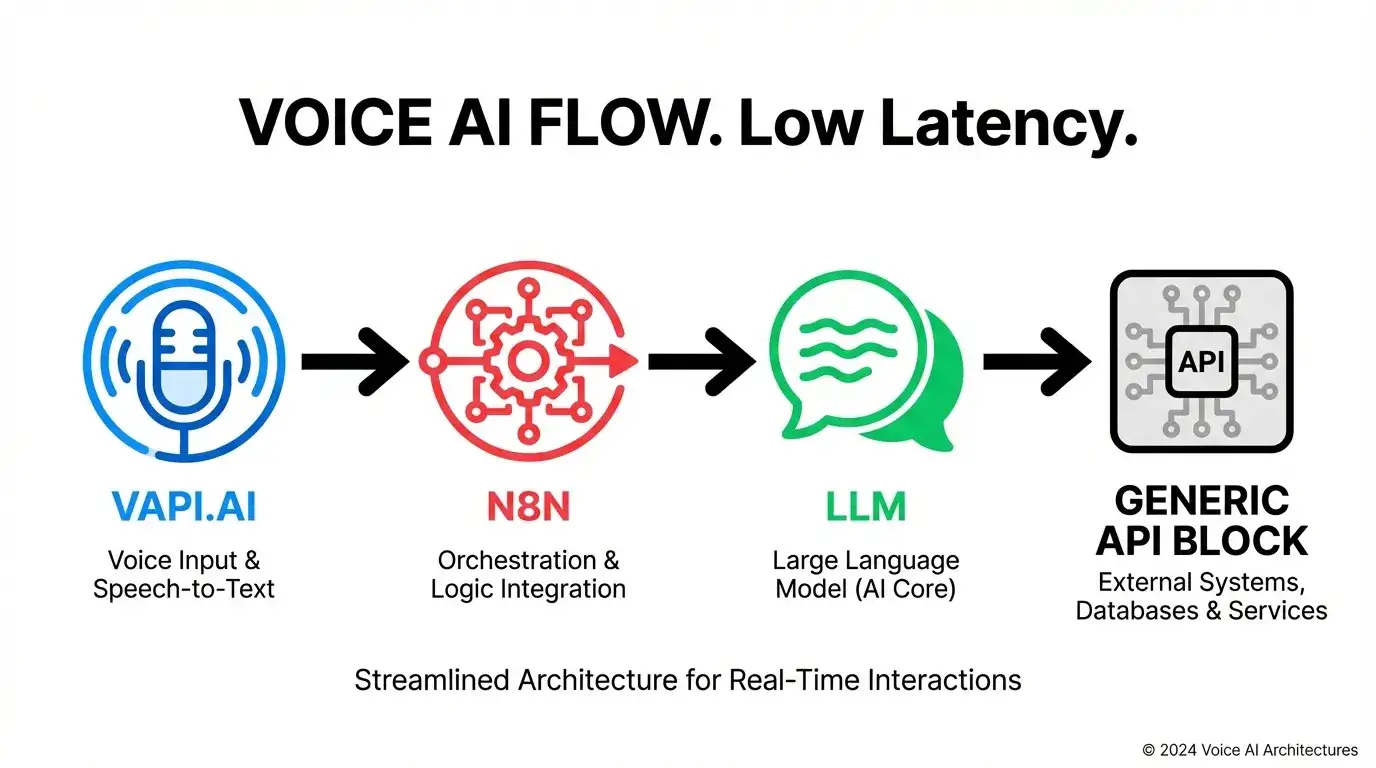
Voice AI Agent Architecture Flow
1. Vapi.ai
(Voice/Telephony Gateway)→
2. n8n
(Logic/Orchestration)→
3. OpenAI/LLM
(Conversational Brain)→
4. External APIs
(Action Execution)
Architecting Your Voice AI Stack: Vapi.ai, n8n, and OpenAI
Building a resilient n8n voice AI agent starts with a robust stack. Vapi.ai serves as your real-time telephony and voice gateway, handling audio streams and integrating with advanced ASR/TTS. Next, n8n takes over, becoming the central nervous system. It orchestrates complex agent logic, manages conversational state, and integrates with external APIs for function calling. OpenAI (or alternatives like Anthropic/Mistral) provides the conversational intelligence, parsing intent and generating human-like responses. But how do these pieces actually fit together to deliver a seamless experience? Wiring them up involves setting webhooks in Vapi.ai to trigger n8n workflows. These workflows then communicate with your chosen LLM and send responses back to Vapi.ai. Each node in n8n represents a critical step in the conversational flow, from intent detection to external API execution and response generation.
Scale Your Business, Not Your Headcount
The secret to 10x growth isn’t working harder; it’s smarter systems. From CRM syncs to autonomous AI agents, we build the infrastructure that runs your business on autopilot.
Voice AI Stack Latency Benchmark & Optimization Matrix
| Component | Estimated Latency (ms) | Optimization Strategy |
|---|---|---|
| Vapi.ai (Telephony/Gateway) | 100-200 | Geo-optimized servers, early stream processing. |
| n8n Workflow Execution | 50-300 | Efficient node design, asynchronous operations, caching, dedicated server resources. |
| LLM Inference (OpenAI GPT-4) | 500-1500 | Groq integration, smaller models (GPT-3.5 Turbo), batching, prompt engineering. |
| LLM Inference (Groq LLaMA-2) | 50-150 | Direct Groq API, optimized prompt tokenization. |
| ASR/TTS (DeepGram) | 100-300 | Streaming ASR/TTS, custom models, endpoint proximity. |
| External API Calls | Varies (50-1000+) | Caching, async calls, robust API design, webhook-based updates. |
The Data Moat: Achieving Sub-800ms Latency for Natural Conversations
So, what’s the secret to making these conversations feel truly human? The magic number for natural voice interaction is 800 milliseconds. Go above that, and conversations feel clunky and unnatural. Your voice AI agent becomes frustrating, fast. The “Latency Benchmark & Optimization Matrix” above isn’t theoretical; it’s a practical roadmap we can use. Integrating Groq for LLM inference dramatically reduces the brain’s processing time from potentially over a second with standard OpenAI models to a mere 50-150ms. Similarly, streaming ASR/TTS providers like DeepGram are non-negotiable for real-time responsiveness. Within n8n, you’ll want to optimize your workflows carefully. Avoid unnecessary database calls or complex logic that isn’t absolutely critical path. Pre-fetch data when possible. Seriously, every millisecond counts.
Beyond the Hype: Building a Voice AI Agent That Actually Works
Crafting a production-ready n8n voice AI agent isn’t a weekend project. It demands careful architectural choices, an obsession with latency, and robust error handling like intelligent call handoffs. The key takeaway here is to focus on the user experience. If your agent is slow or gets stuck, users will abandon it. Invest in understanding the nuances of Vapi.ai, optimizing n8n workflows, and leveraging low-latency LLMs like Groq. This approach ensures your voice agent provides real value, not just a proof of concept that falls flat.
Core Pillars of a Production Voice AI Agent
🔥 Ultra-Low Latency
Integrate Groq, DeepGram for <800ms response.
🧠 Intelligent Logic
n8n workflows, robust function calling.
📞 Seamless Telephony
Reliable Vapi.ai integration.
🤝 Human Handoff
Context preservation for complex issues.