Eligibility and policy check
Your category against OpenAI's ad policies and your target countries, before any budget: especially for financial products, which OpenAI's policies restrict closely.
Advertising · AI assistants
ChatGPT Ads are sponsored units that OpenAI shows below ChatGPT's answers; OpenAI began testing them in the US in February 2026. This page is for B2B, SaaS and fintech teams deciding whether to use them. Goodish already runs ChatGPT Ads for two clients, and we judge them like any other channel: on qualified leads and closed deals in the CRM, not on clicks.
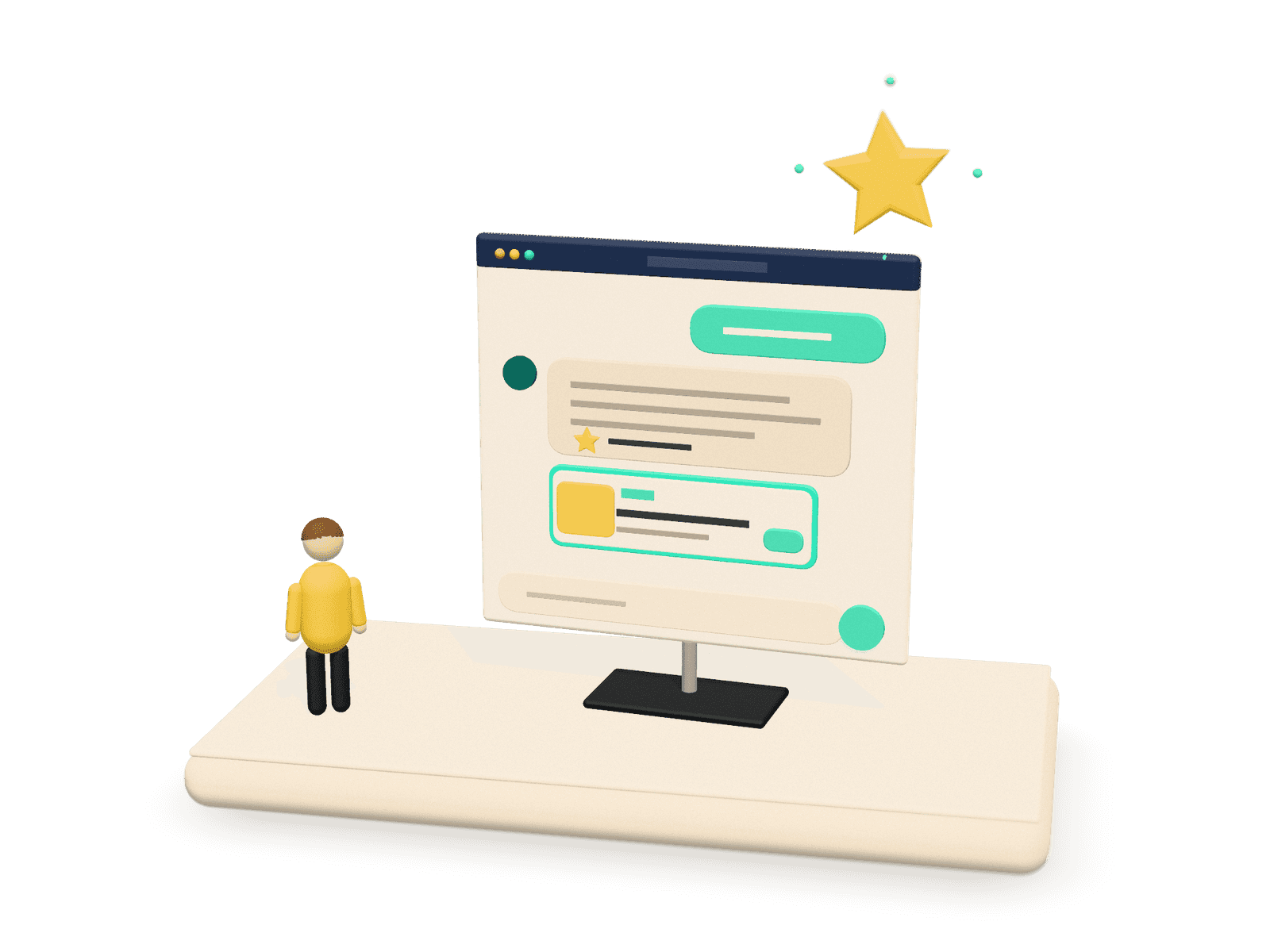
In the format OpenAI launched with, ads appeared below the end of a ChatGPT response, clearly labelled as sponsored and visually separated from the answer. One ad unit could hold one or more items, from one advertiser or several.
OpenAI announced ads on 16 January 2026 and started testing them in the US on 9 February, for logged-in adults on the Free and Go plans. At launch, Plus, Pro, Business, Enterprise and Edu accounts didn’t see ads, and OpenAI said no ads would be shown to accounts identified as under 18.
As OpenAI described it at launch, ChatGPT chooses an ad by looking at the context of the current conversation, the ad’s landing page, title and copy, the advertiser’s context hints and targeting, and, when ad personalisation is on, signals from the user’s wider ChatGPT use. Ranking combines relevance and the advertiser’s bid. Personalised ads were not available in the EEA or Switzerland at launch.
Five principles: mission alignment, answer independence, conversation privacy, choice and control, and long-term value. In OpenAI’s words, “ads do not influence the answers ChatGPT gives you”, conversations stay private from advertisers, and user data is never sold to them.
Advertisers receive only aggregated performance numbers such as views and clicks, and ads are not eligible to appear near personal health, mental health or politics.
Three routes: OpenAI’s agency and technology partners, the self-serve Ads Manager, or the Advertiser API. The 2026 rollout went like this: Ads Manager launched in beta on 5 May, self-serve opened in Europe, India and the Middle East and North Africa at the end of August, and in September OpenAI said ads were available in more than 60 countries.
What buying looked like when self-serve launched in 2026:
Budgets, countries and bidding options change as the platform develops, so we confirm the current rules in Ads Manager before planning a test. One launch rule worth checking: new self-serve accounts could at first advertise only in their home country, until identity verification and a spend threshold were met. That matters when the advertiser and the market are in different countries.
Only in part. The ad policies OpenAI published in 2026 restricted financial products and services: in the US, OpenAI could approve, case by case, advertisers of auto loans, credit cards, credit monitoring, deposit accounts, financial planning, insurance, investment services, mortgages, personal loans and payment services, and could ask for proof of licensing.
Financial tools that don’t promote financial products, such as budgeting apps or general financial software, were generally permitted. Credit repair, debt settlement, debt assistance and alternative investments were not allowed, and financial-services ads outside the US were generally prohibited. Policies change, so we check the current version for your category and countries before any budget is spent.
Goodish runs ChatGPT Ads for two clients, and we judge them the way we judge every channel: by what reaches the CRM. Views and clicks tell you an ad was shown; qualified leads and closed deals tell you whether it was worth paying for.
That matters here because relevance is not guaranteed. An independent 2026 study of more than 50,000 commercial prompts found ads on about 26% of them, and around 14% of the ads it saw were effectively unrelated to the prompt.
So every account starts the same way:
We publish ChatGPT Ads results once we have enough of them to be meaningful.
We usually start here. ChatGPT search shows pages its OAI-SearchBot crawler can reach; a site that blocks it won’t appear in ChatGPT’s search answers, while blocking GPTBot only opts out of model training. OpenAI also says it uses third-party search providers and that placement is never guaranteed.
It matters for B2B: in G2’s 2026 survey of 1,076 B2B decision-makers, 51% said they start software research in an AI chatbot more often than in Google. Referrals from ChatGPT carry utm_source=chatgpt.com, so you can see them in analytics.
What helps is unglamorous: a direct answer in the first paragraph, question-shaped headings, concrete figures, structured data, an llms.txt map, and the same company description everywhere. This page is built that way, as is the rest of this site.
ChatGPT Ads
Your category against OpenAI's ad policies and your target countries, before any budget: especially for financial products, which OpenAI's policies restrict closely.
OpenAI's Pixel and Conversions API set up with lead events, tied to your CRM, so a click from ChatGPT is judged like a click from Google.
ChatGPT Ads were built around conversations, not keywords. We write the context hints, titles and landing pages that tell OpenAI which conversations the ad belongs in.
A fixed budget and a fixed window, compared with your Search and Meta cost per qualified lead. Then a written recommendation: scale, reshape or stop.
Whether ChatGPT, and other assistants, can crawl, understand and cite your site, and what to change so they recommend you without an ad.
ChatGPT referrals arrive tagged utm_source=chatgpt.com; we report paid and organic ChatGPT traffic next to Google and Meta in one dashboard.
Policy, countries, tracking, and how ChatGPT already describes you and your competitors when buyers ask.
Pixel and Conversions API, CRM tie-in, context hints and two or three ad variations on a fixed budget.
Cost per qualified lead next to Search and Meta. A test that says no is a useful result; you will hear it from us.
From Tech Pulse

FAQ
OpenAI announced ads on 16 January 2026 and began testing them in the US on 9 February 2026. Self-serve buying opened in Europe, India and the Middle East and North Africa at the end of August 2026, and in September 2026 OpenAI said ads were available in more than 60 countries. Ads appear below the end of a response, labelled as sponsored and visually separated from the answer.
When ads launched, they were shown to logged-in adults on the Free and Go plans; Plus, Pro, Business, Enterprise and Edu accounts didn't see them, and Free users could switch to an ad-free experience with lower usage limits. OpenAI's policy is not to show ads to accounts identified as under 18. Plans change, so check OpenAI's help centre for the current list.
OpenAI says they do not: one of its five advertising principles is answer independence, and advertisers receive only aggregated performance data, not conversations. Ads are also kept away from sensitive topics such as personal health, mental health and politics.
Through OpenAI's self-serve Ads Manager, its agency and technology partners, or the Advertiser API. At launch you could pay per thousand impressions, per click, or optimise for conversions while still paying per click or impression, and the minimum daily campaign budget was $25 (€15 when billed in euros). Check the current minimum and bidding options in Ads Manager before you plan a test.
Under the ad policies OpenAI published in 2026, approved US advertisers in listed categories such as credit cards, personal loans, deposit accounts and payment services could be allowed case by case, possibly with proof of licensing. Financial software that doesn't promote financial products was generally permitted, financial-services ads outside the US were generally prohibited, and credit repair and debt settlement were not allowed anywhere. We check the current policy for your category and countries before any spend.
Yes, we run ChatGPT Ads for two clients. We judge them on CRM data, qualified leads and closed deals, next to the same clients' Search and Meta campaigns. We publish results once we have enough of them to be meaningful, and we won't quote numbers before that.
Make sure ChatGPT can reach and understand your site. OpenAI says sites must allow its OAI-SearchBot crawler to appear in ChatGPT search; blocking GPTBot only opts you out of model training. After that it is the work we do for every page: a direct answer in the first paragraph, clear question headings, concrete figures, structured data and a consistent description of your company everywhere it appears. Placement is never guaranteed.
We’d like to use analytics and ad measurement (Google, Meta, LinkedIn) to see what works on this site. Nothing is set until you choose. Privacy notice