Lead qualification
Incoming leads scored and enriched by AI before they reach the sales team.
Typeform · OpenAI · ZohoServices · AI & Automation
Goodish builds AI agents and automated workflows, mostly in n8n with OpenAI, Claude and Gemini, that take busywork off marketing and sales teams: lead research, reporting, content and support. They run around the clock, and one rule holds: the agent writes to a review queue, and nothing reaches a customer or a record until a person approves it.
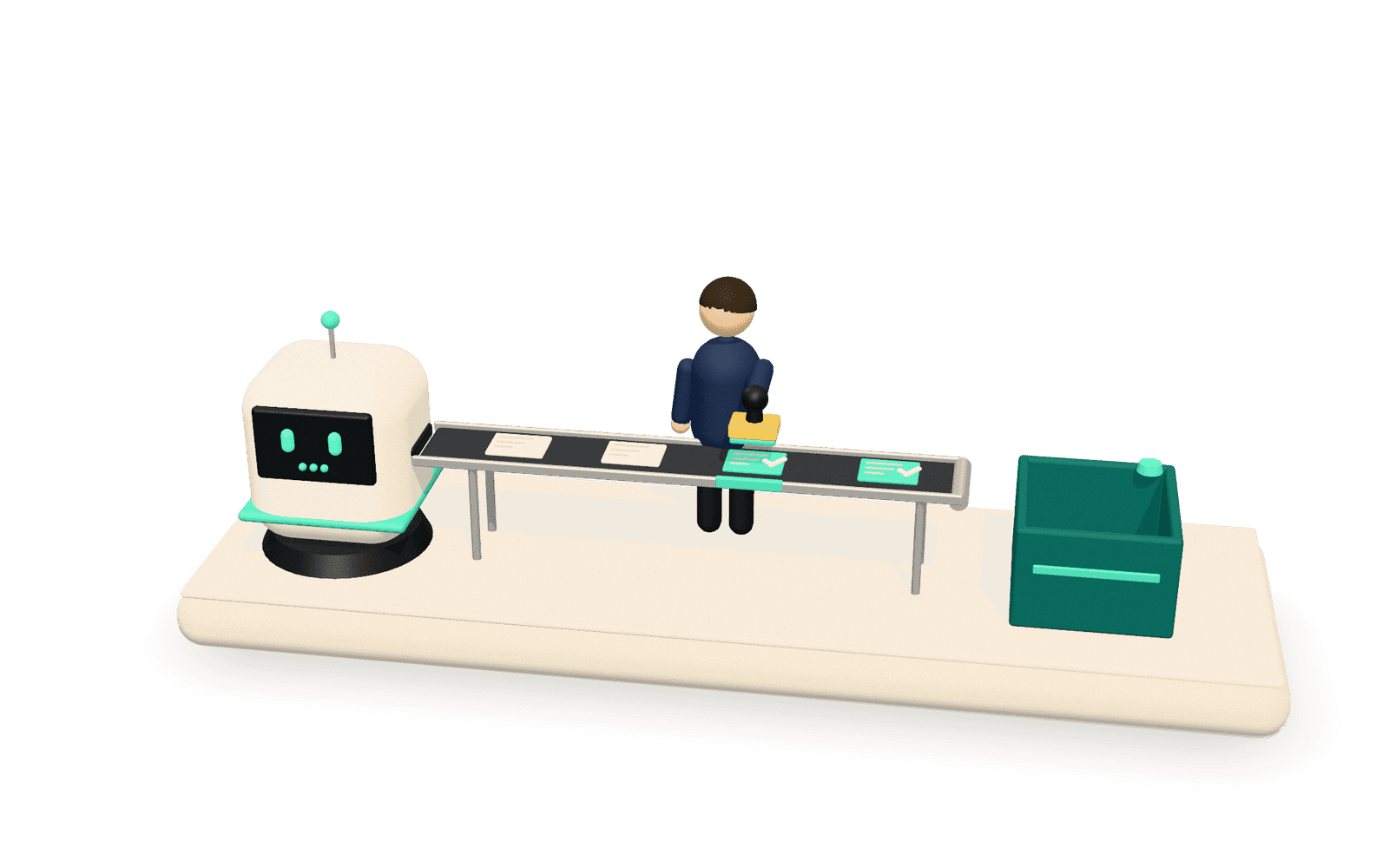
Incoming leads scored and enriched by AI before they reach the sales team.
Typeform · OpenAI · ZohoRecent news and company details gathered before every call, so reps start with context.
Calendly · OpenAI · ZohoData from ads, social and SEO tools turned into a meeting-ready report every Monday morning.
GA4 · Sheets · SlackCustomer questions answered from your own documents, on your website or on WhatsApp.
WhatsApp · Gemini · DriveOne video transcript turned into posts, a LinkedIn article and a blog draft, queued for review.
YouTube · Claude · WordPressCross-platform anomaly alerts and PPC optimisation triggers, wired to your ads data.
It is software that does the repetitive parts of the job: reading, sorting, researching, summarising, drafting and updating systems. A workflow starts from a trigger, uses an AI model where judgement on text is needed, and finishes by updating a record, sending a report or notifying a person.
We build these for growing companies, most of them American, and for ourselves first. The point is not a chatbot on your homepage. It is fewer hours spent copying data between tools.
Because AI models are confident even when they are wrong. A wrong lead score or a made-up detail in a customer email costs more than the time the automation saved.
So the agent writes to a review queue, and the queue drains only on human approval. People keep the judgement calls; the agent does the preparation.
Two products in production. eKmet is a voice-first app for Slovenian farmers: say what you did in the field, and eKmet builds the legal record, with the parcel, a dose check and the weather at the time of work, for the farmer to confirm. SocialAI is our social-media management software for agencies.
ATC Healthcare, one of our US clients, also runs social content automation we built. We run our own agency on the same kind of workflows.
Yes, and it is a separate job from automation. AI assistants like ChatGPT increasingly answer the questions your buyers used to type into Google. Being recommended there depends on pages they can crawl, understand and cite. We cover that on the ChatGPT Ads page, together with the new ad channel.
A form submission, an email, a CRM update or a schedule starts the workflow the moment it happens.
The chosen model reads the input, enriches it with retrieval over your own documents, and drafts a decision or an output.
The result lands in a queue. The queue drains only on human approval, so the agent never writes to your CRM or a customer on its own.
Approved results sync to the CRM or database, reports go out and the right people are notified.
We map the manual work, pick the processes where automation pays back fastest, and agree what a person must still approve.
Workflows built and connected to your tools, tested on real data, with the review queue in place.
Live, monitored, and documented, so your team knows what runs, when, and how to stop it.
Scoped per workflow: the price depends mostly on the number of systems involved, and we quote after the free audit.
From Tech Pulse


FAQ
Mostly by taking repetitive work off people: research, reporting, first drafts, data entry and routing. It also speeds up analysis and makes finer audience segmentation practical. The saving is real when the work was manual and frequent; it is small when the process was already automated.
Not in what we build. The agent writes to a review queue, and the queue drains only when a person approves. You can relax that for low-risk steps later, deliberately and in writing.
n8n is a workflow automation tool that can be self-hosted, so the workflows and the data can stay on infrastructure you control. It also connects to most marketing and CRM tools and to the major AI models, which keeps us from locking you into one vendor.
Whichever fits the task: OpenAI, Claude and Gemini all appear in our client workflows. The choice depends on the job, the cost per run and where the data is allowed to go.
It depends mostly on the number of systems the workflow touches. We quote on scope after the free audit, so you see a fixed price before anything is built.
Book the free audit: thirty minutes in which we look at the processes your team repeats every week and point out the two or three where automation pays back first.
We’d like to use analytics and ad measurement (Google, Meta, LinkedIn) to see what works on this site. Nothing is set until you choose. Privacy notice